
The Role of Specialty Medicines in Neurology Treatment
Neurological diseases are unique in terms of having a wide range of manifestation forms with similar diagnoses. For any two patients with a similar condition, medical practitioners may find it more difficult to select therapeutics than in other disease categories, which is why specialty medications play an especially prominent role in treating such diagnoses.
Specialist Medicines in Neurology: Why Do They Matter?
The neurology-related afflictions have complex biological mechanisms that are not yet entirely understood by science. The medications for multiple sclerosis, epilepsy, Parkinson’s disease, and other conditions target either the central or peripheral nervous system, which frequently requires them to overcome additional barriers or target specific receptors that generic drugs are not capable of doing.
Thus, neurology prescriptions more often than not involve a modified approach to dosing or post-treatment observation than typical medications. This nuance is reflected in the way the Neurology-focused pharmaceutical companies operate: the research and development cycle for such medications can be particularly lengthy, and the sales require a higher degree of post-market interaction with the client due to the complexity of the dosing regimes.
Pharma Companies and Neurology: What Makes the Collaboration Unique?
The Neurology-focused pharma companies are unique in several aspects compared to the companies operating in other spheres. The R&D process for generic or specialty drugs is significantly longer than in other therapeutic areas. Additionally, the clinical endpoints for indications targeting the nervous system can be particularly challenging to identify, as can be the selection of the appropriate patient cohorts. Finally, the post-market research is of particular importance, as the neurological afflictions often have longer progression patterns than other conditions. The Neurology field requires pharmaceutical companies to invest significantly more effort into each stage of the drug discovery and development process.
The companies focusing on neurological conditions also have to develop deeper relationships with medical professionals than those operating elsewhere. Such companies engage in closer relationships with neurologists, movement disorder specialists, and epilepsy experts, particularly throughout the post-market treatment follow-up period.
Why Do Specialty Medicines Matter?
Neurology is just one of the many areas that are seeing a significant boom in the specialty medicine sector. The reason why specialty pharmaceuticals have become so sought after in the last 10 years, especially among hospitals, is the sheer increase in the number of chronic disease indications with well-defined mechanisms.
This shift has affected the way caregivers approach treating such afflictions, and it has also changed the way pharmacies operate: the latter now have to pay significantly more attention to the unique storage requirements, patient education materials, and other factors.
What Are the Benefits of Specialty Medicines?
Specialty medicines have multiple benefits for each party involved. For patients, such pharmaceuticals usually target the particular mechanism of action that is responsible for their condition. For medical professionals, such products usually contain more data on the specific patient subsets for which they are indicated, enabling them to get better control over particularly challenging cases. Additionally, pharmacists and hospitals can use the specialty drugs as a tool to improve their monitoring of patients who require higher levels of after-sales support, which typically leads to fewer avoidable complications.
Neovae and Specialty Medicines: The Similarities and Differences
The specialty medicines produced by Neovae follow similar principles of development regardless of the therapeutic area, with minor differences based on the target patient population. The principles that the company has developed for its nephrology, gastroenterology, and rheumatology divisions apply to the Neurology and other chronic disease areas. Across all of the aforementioned indications, the Neovae-developed pharmaceuticals offer a chronic care-focused approach to managing the patient’s symptoms or the underlying disease mechanism.
The neurology-related aspects of the company’s work are not significantly different from the other chronic care areas, although the company continues to design and test new approaches for treating the nervous system afflictions. In all of the therapeutic areas, the focus of the company’s development strategy is on the chronic disease indications that have been previously unserved or partially served by traditional prescriptions.
Where to Learn More About Neovae's Product Approach
Neovae Biomedics operates as a specialty healthcare company built around exactly this kind of focused, science driven development, working closely with physicians and hospitals to address conditions that require more than a standard treatment protocol. Readers interested in how this philosophy translates into an actual portfolio can explore the company's full range on the Neovae Biomedics website.
For a closer look at how this approach is applied across therapeutic categories, the full list of Neovae Biomedics pharmaceutical products is available on the company's products page, covering formulations developed for chronic kidney disease, cardiovascular risk, and related complex conditions.
The Future of Specialty Medicines in Neurology
In the future, it is expected that more and more disease mechanisms will be understood well enough for the development of pharmaceuticals that target them specifically. The conditions for which the traditional R&D paradigm of the “one size fits all” approach has been proven ineffective are now being actively supplemented or replaced by specialty-developed medications. Neurology is one of the key areas where such paradigm shifts are currently taking place.
The neurology specialty-focused pharmaceuticals have unique indications, usually with very specific mechanisms of action that require a higher level of collaboration between the prescribing physicians, pharmacies, and distributors. Understanding the principles behind such products is essential for all three parties; it empowers the hospitals and caregivers to provide the patients with higher quality of after-sales support, particularly in terms of medication compliance and complication prevention.
Frequently Asked Questions
Neovaebiomedicss: Inside a Specialty Pharma Company in India
Most people know the medicine, not the company behind it. Yet for doctors, distributors, and patients, the maker matters...
What Toxivap Capsule is for and How to Order It Safely Online
Bloating, irregular bowel movements, and an unsettled stomach are common complaints, and they often trace back to the ba...

Forsugar-5 Tablet: A Practical Option for Blood Sugar Management
Living with diabetes is mostly a matter of routine: meals, movement, monitoring, and medicine taken the way it was presc...
Neoalfa-Q Tablets: What They Are For and Where to Buy Them
People with chronic kidney disease are often told to eat less protein. It sounds simple, but cutting protein too far can...

Selva DT Tablet: Uses, Dosage Information and What to Know Before You Buy
When the kidneys cease to clear phosphate from the blood as efficiently as they should, a mineral imbalance results, one...

Forsugar-5 Tablet: A Practical Guide to Managing Type 2 Diabetes
Type 2 diabetes management has evolved considerably over the past two decades, moving beyond a single class of drugs tow...
Neoalfa-Q and Sevla DT: Two Pillars of Nutrition and Mineral Management in Kidney Disease
Chronic kidney disease (CKD) rarely stays confined to the kidneys alone. As kidney function declines, two closely relate...

MV-MAX: Supporting Hair, Nerves and Energy With B-Complex and Biotin
Hair thinning, persistent tiredness and tingling or numbness in the hands and feet are three complaints that seem unrela...

Irovap-S Multivitamin Syrup: One Formula for the Whole Family's Nutrition
Getting a household's daily nutrition right is rarely simple. Children go through picky-eating phases, adults skip meals...
VNG-450 (Valganciclovir 450 mg): Uses, Precautions and What Patients Should Know
Cytomegalovirus, which is generally referred to as CMV, is a virus that the majority of healthy individuals carry withou...

A Practical Guide to Uses, Benefits and Buying of Polycarb Tablet
Iron deficiency anaemia is the most commonly diagnosed nutritional disorder in women, especially during their reproducti...

Irovap Tablet: Composition, Benefits and Everyday Uses
Iron deficiency is one of the most common nutritional deficiencies that we see in clinical practice, whether it occurs i...
Carnivap 300: A Complete Guide to Uses, Benefits and Buying It Safely
If your doctor has lately talked to you about Carnivap 300, or if you've come across it as you're looking into antioxida...
Teninef D for Managing CKD-MBD Through Calcium and Vitamin D3 Support
Chronic kidney disease seldom remains limited to the kidneys themselves; as kidney function decreases, the body's capaci...
Acihold Medicine: Uses, Benefits, And What To Know Before Taking It
Gastric acidity is perhaps one of the most frequent complaints that brings patients to their physician, pharmacist, or h...
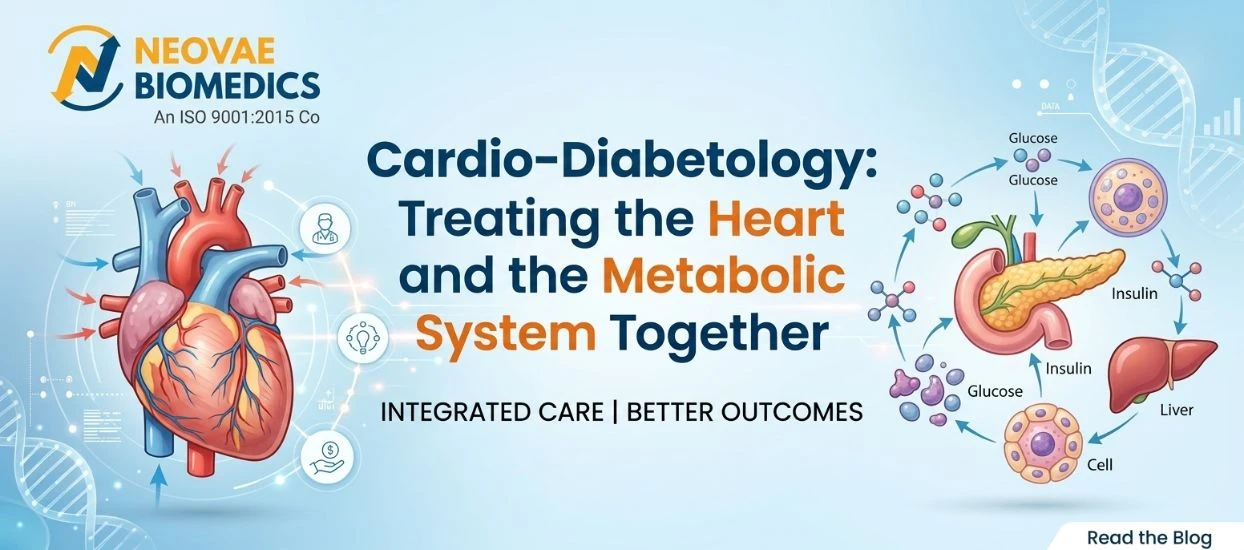
Cardio-Diabetology: Treating the Heart and the Metabolic System Together
Cardiology and diabetology used to exist as two separate worlds, focusing on disparate guidelines and having little over...

The Power of Speciality Healthcare
The human body is an extraordinary network where every organ, tissue, and system depends on another to function efficien...

Talking to Family About a Serious Diagnosis
Clinicians are trained to deliver a diagnosis. Patients rarely get the equivalent training in relaying it to the people...

Understanding Your Treatment Plan & Medicines
A diagnosis rarely arrives with a manual. What follows it, however, usually does: a treatment plan, drawn up by a physic...

A Holistic Vision for the Future of Patient Care
Neovae Biomedics is a speciality healthcare company dedicated to improving patient outcomes through innovation and scien...